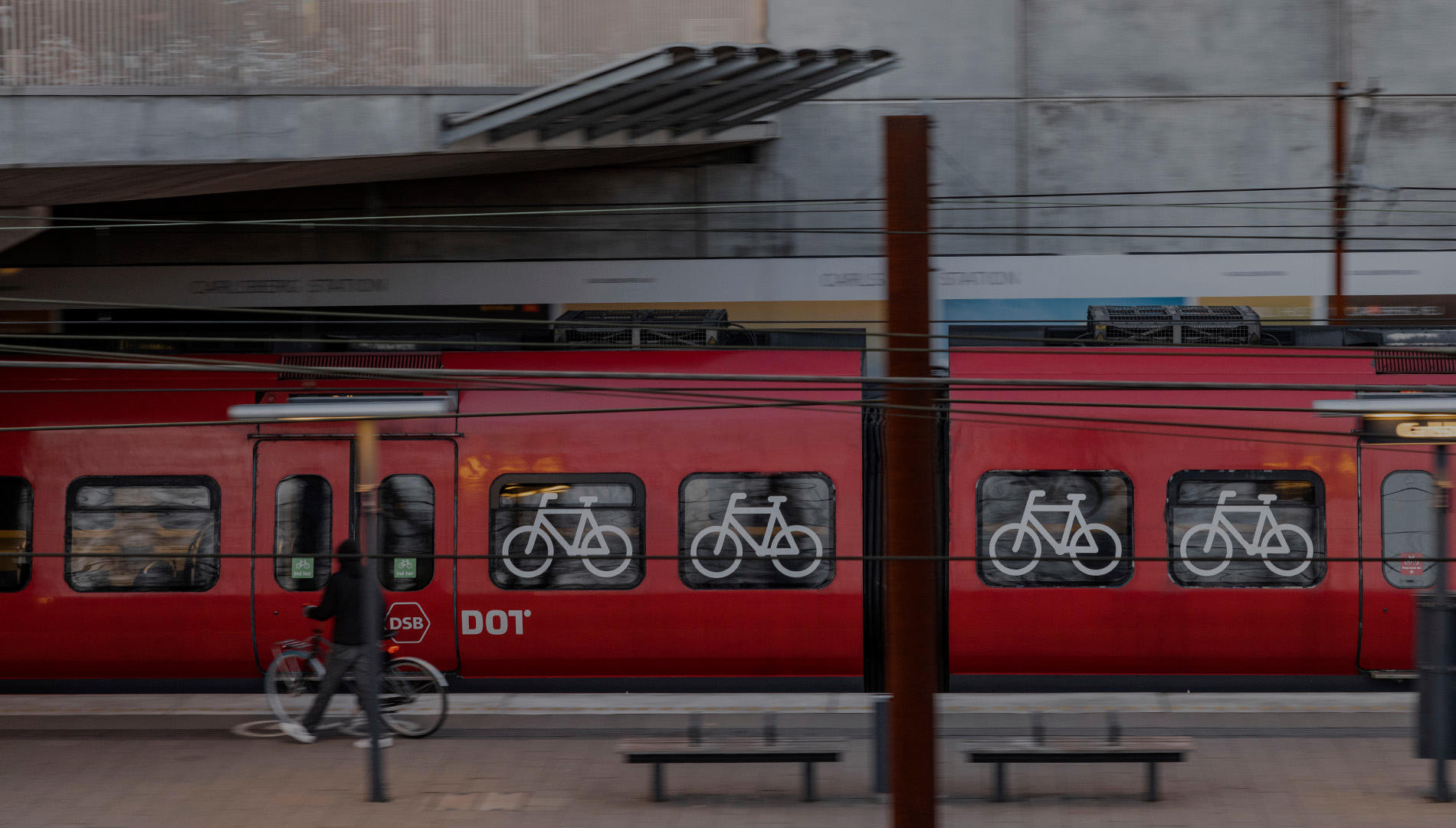
Most people know that air travel emits a lot of CO₂. But in everyday mobility, there are also significant differences between modes of transport – both in terms of climate impact, space in cities, and our health.
To raise greater awareness of this, DSB has created a transport guide, to which COWI has contributed expert assessments of the effects. The guide looks at three of the major challenges in the transport sector: climate, congestion, and health.
This is explained by DSB's Head of Sustainability, Aske Mastrup Wieth-Knudsen. The guide aims to increase awareness of the advantages and disadvantages of different modes of transport such as cycling, train, bus, (electric) car, plane, and ship.
"We want to bring the facts to the table about how modes of transport affect us and society. Here, it is essential to look specifically at climate, congestion, and health," he says, adding that congestion is a growing problem in the country's larger cities.
"Transport plays a crucial role here, and we want to highlight that bicycles and trains are an important part of the solution," he says.
For each of the three areas in the transport guide – climate, congestion, and health – the message is therefore clear: aim for the top whenever you can.
"As is clearly evident, the bicycle always wins. But the train often wins over other forms of transport, and when you combine the two, you get many positive effects from it," says Aske Mastrup Wieth-Knudsen, DSB's Head of Sustainability.
"The bicycle and the train should become each other's best friends. Because when we join forces, we are a strong alternative to private car use," he adds.
A strong alternative
The Danish Cyclists' Federation, with whom DSB collaborates on, among other things, cycle parking at stations, better options for taking your bike on the train, and not least the campaign "We Cycle to Work", shares this view. This is according to the Federation's Director, Kenneth Øhrberg Krag.
"The bicycle and the train should become each other's best friends. Because when we join forces, we are a strong alternative to private car use," he says.
For this reason, there is also great enthusiasm for the new transport guide, which clearly demonstrates the benefits of both cycling and the train.
Kenneth Øhrberg Krag highlights that the bicycle makes a significant difference – not least in the area of health. According to the National Knowledge Centre for Cycling, men who cycle live on average 2.9 years longer than those who do not cycle. For women, the figure is 2.2 years.
He therefore also believes that the transport guide makes "perfect sense", as it simply and precisely shows what is best from a transport perspective in relation to our health, climate, and congestion.
A useful benchmark
"It is really great that DSB, as a major player, is putting this message out there, and we are pleased that our mode of transport – the bicycle – comes out on top," says Kenneth Øhrberg Krag, adding that the transport guide can also serve as a benchmark for political decisions.
"It is useful to be able to put on the table when decisions about future infrastructure are being made. Because it clearly shows what is most worthwhile to invest in across a number of crucial parameters," he says.
Aske Mastrup Wieth-Knudsen shares this view. He does, however, emphasise that the transport guide is first and foremost intended to give people an informed basis for their choices.
"People must choose for themselves how they get around. And even though some might say that the transport guide's message is obvious, it is valuable to have it repeated, so that people have the opportunity to reflect on their transport habits and perhaps make different choices."
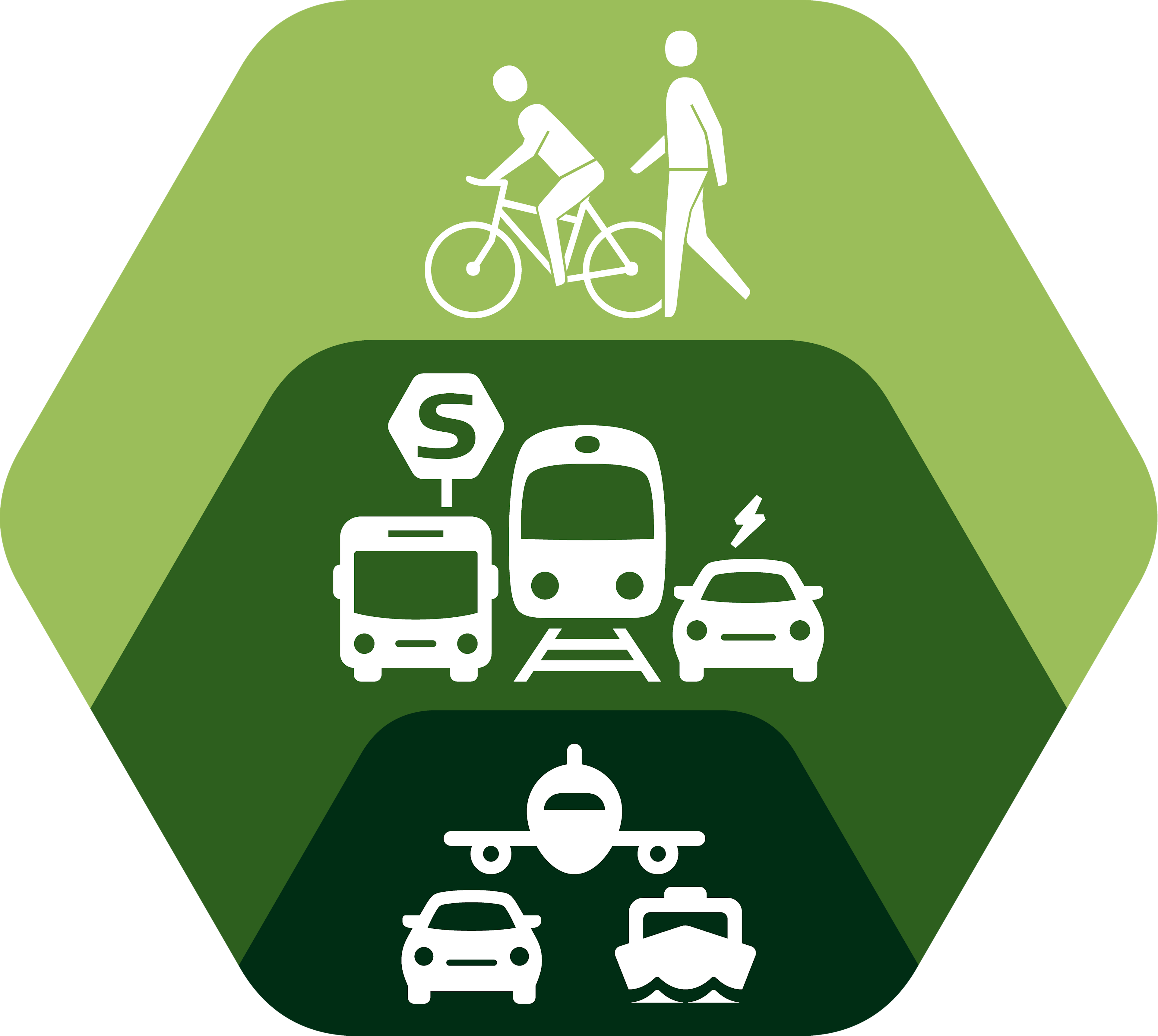
The path to lower CO2e transport choices
Ranking of transport modes is based on average emission factors measured as CO₂e per passenger kilometre at average occupancy, based on data from 2025.